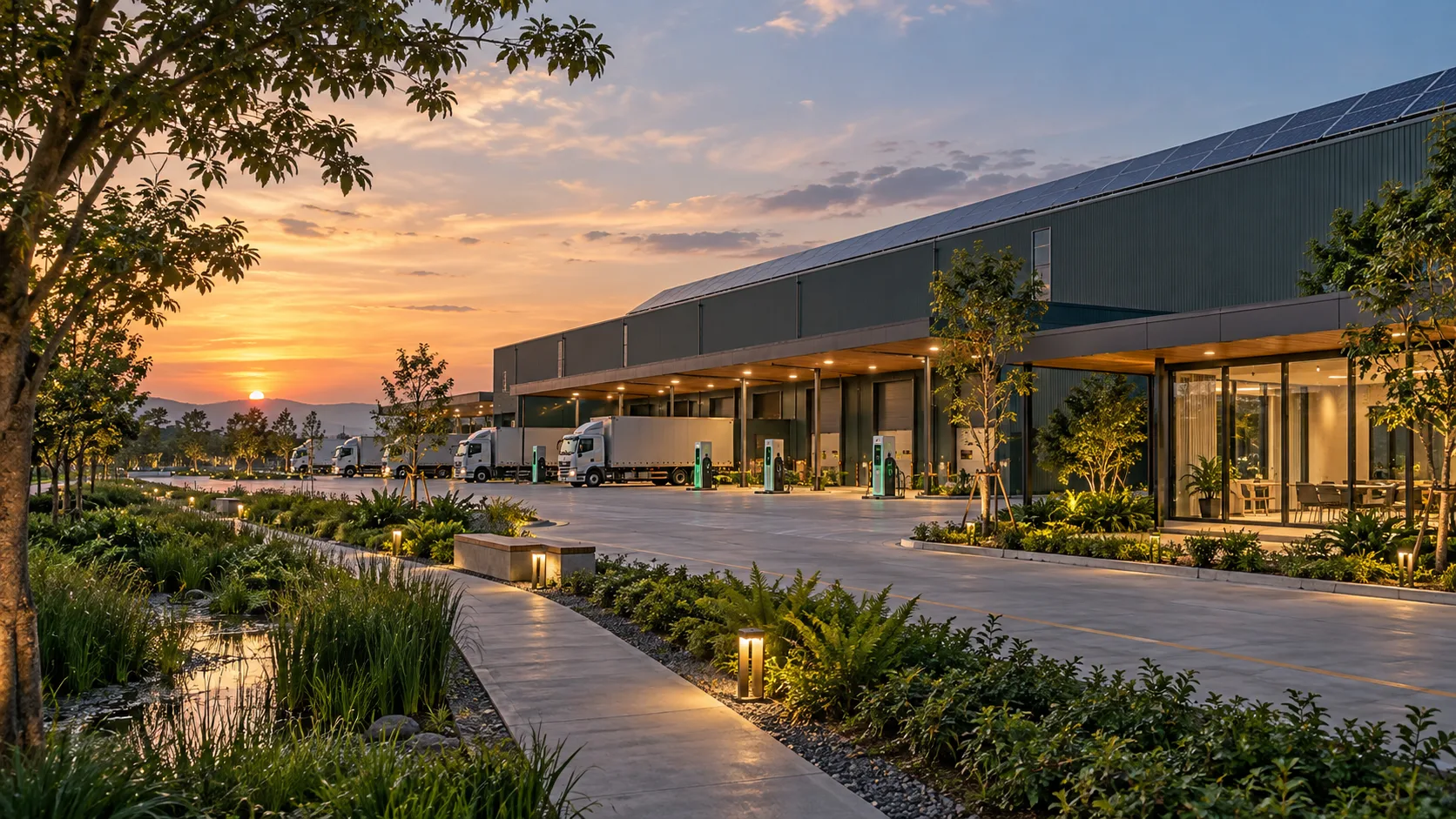
A green-building certificate answers "how was the building designed". Infrastructure funds and multinational tenants ask a different question: "how much is the building emitting, and where does that number come from". The two questions need two different things.
Certification: pick one of three
- EDGE — from IFC, focused on energy, water and material savings; suits warehouses and depots because it is fast and low-cost.
- LEED — most widely recognised by multinational tenants; suits cold stores with global customers.
- LOTUS — from the Vietnam Green Building Council, closest to local climate and codes.
CF Land applies one of the three to every new asset, chosen by the tenant and the funding source of each project.
Measured numbers: four streams
- Electricity used and rooftop solar self-consumed — monthly, from meters, not estimates.
- Refrigerant: type, charge, leakage — NH₃/CO₂ instead of HFCs.
- Yard-equipment fuel: diesel or electric, machine hours.
- Water and wastewater, especially at depots with tank cleaning.
These four streams run through MQ ICT's platform into the capital owner's report alongside operating data. Without the platform, ESG numbers become a manual job at year end.
Who needs the numbers
Banks and development institutions need them for green financing; funds need them to buy the SPV at capital recycling; multinational tenants need them for supply-chain reporting. One set of numbers serves all three.
If your customers already ask for monthly warehouse emissions, ask your landlord: which meter does that number come from?