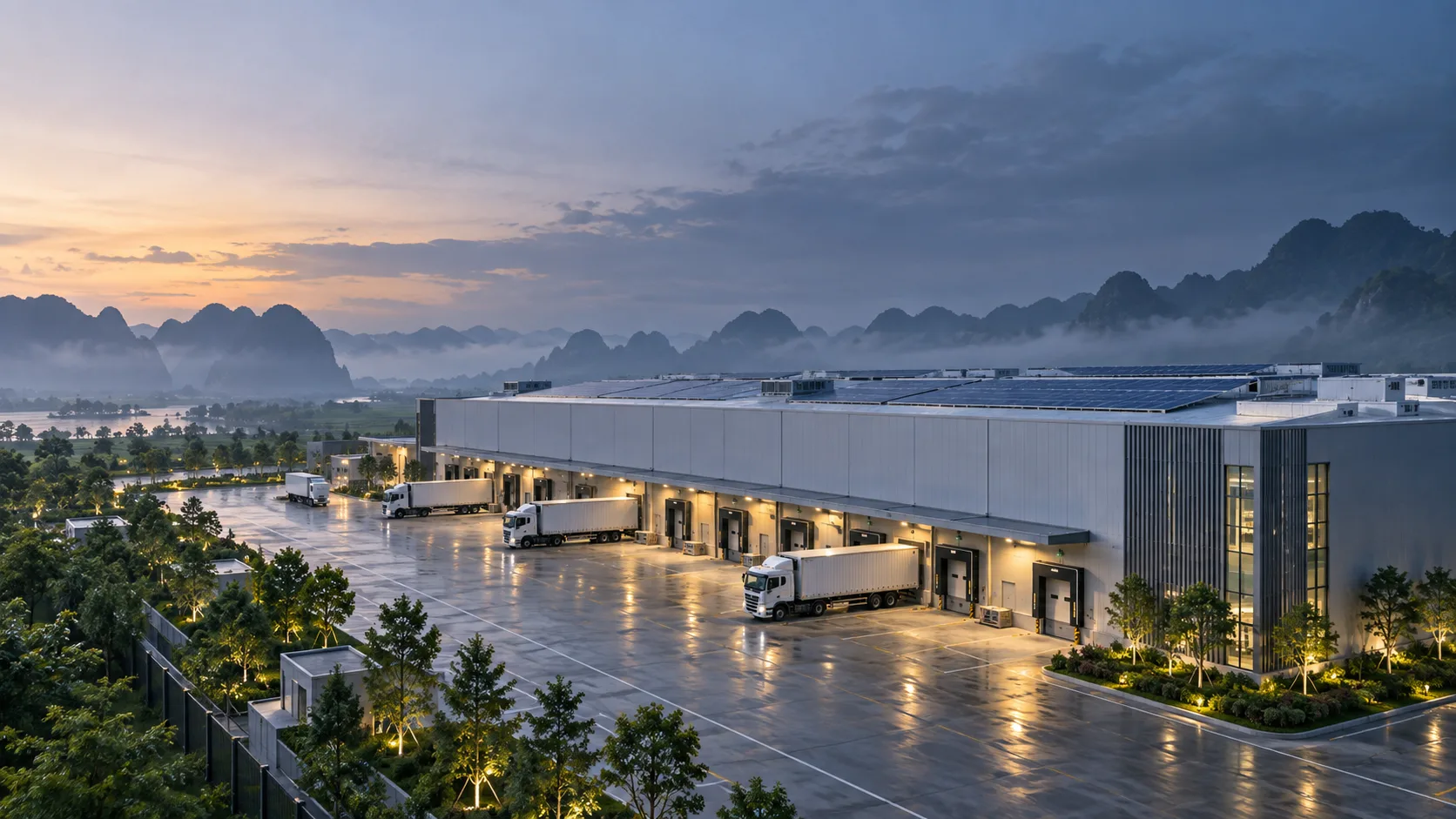
A standard warehouse with one wrong parameter can be fixed. A cold store with the wrong temperature band changes the floor slab, insulation, refrigeration and racking. So CF Land asks the tenant to fix four things before the engineers go to look at land.
Four things to fix
- Temperature bands and area split: frozen at −22 °C, chilled at 0–4 °C, ambient at 18–20 °C — how many pallets in each. The split sets refrigeration capacity, number of docks and chamber layout.
- Module size: 5,000 / 10,000 / 15,000 pallets. Smaller modules cost more per pallet but fill faster; large ones need steady volume from day one.
- Racking and automation: single-deep, double-deep or AS/RS decides building height, floor load and column grid. Aubot's equipment has to be designed in from the slab, not added later.
- Vehicle flow and docks: trucks and containers per day, peak hours, whether cold docks are needed.
Why before land
The plot decides dock orientation, setbacks, ground bearing and power supply. Without knowing how many MW of cooling and how many docks the store needs, nobody can say whether the plot should be 2 or 3 ha, or whether it needs its own substation. Looking at land first is looking at an answer without a question.
How CF Land does it
The tenant (CF LogX or a third party) fills in a demand sheet; CGD turns it into a basic design and template estimate under product P1; only then is land filtered by port cluster and cargo route. This order lets the capital owner sign with a tenant and figures already in hand.
If your demand sheet has no column for "pallets per temperature band", do not book a site visit yet.